搜索此博客

2009年6月17日星期三

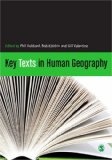
Key Texts in Human Geography

More about Key Texts in Human Geography

I bought this book as part of my "last minute geography scramble" (or in Chinese 抱佛脚) plan. Never really knew much about human geography, I find the book a nice guide to an entry level overview of the discipline. However, I also find that reading the book chapter by chapter without seeking the original texts very boring and discouraging.

Because [David Harvey](http://davidharvey.org/) has three entries in the list of key texts mentioned in the book and [Doreen Massey](http://www.open.ac.uk/socialsciences/staff/people-profile.php?name=Doreen_Massey) two, there are more contributors to the book than the authors of the "key texts" covered. But the editors have done a good job organising a series of chapters with their distinct writing styles and foci. First of all, the chapters were largely arranged in chronological order. As a result by reading the chapter titles alone you can get a sense of the development of the discipline from 1950s to recent years. Secondly, for the earlier decades this kind of organisation also reflects the general trend of thought during that time, such as the "quantitative revolution" in 1950s and 1960s, and the emergence of radical geography in 1980s. However, in later decades such common focus in geographers' thinking becomes less obvious, reflecting the diversification of the discipline and its interweaving with other disciplines such as economics or sociology.

Each of the contributors has also managed to make their chapter as readable and informative as possible. They may have had a standardised template to remind them what should be included in each chapter, just like that outlined on the back cover. But each contributor surely put their own thoughts on the key text of their choice into their writing, and makes every chapter unique. Some of the contributors are becoming key thinkers themselves, and it would be interesting to examine how the key text informed or inspired them to pursue their own thinking on that particular topic.

To a large extent, the expectation you hold when you open the book determines how well you can appreciate it. On the one hand, as emphasised in the introduction, do not think that you can read the book in the place of those key texts. If you do so, you will feel like that you have some beautifully drawn maps to islands of treasures yet you have no vessel to reach there, and the maps only add to your frustration. On the other hand, these introductions are written by established geographers and they will try everything to make the point that geography is no longer a descriptive practice but a science with established theory system, so be prepared for academic style writing not any easier than that you can find in a mainstream human geography journal. That said, to make the most out of the book, the reader should try to seek the original key texts, and use this book as their guide. At that point, one should find the book helpful, interesting and valuable.




Reblog this post [with Zemanta]

2009年5月29日星期五

Google Wave:不只是 E-Mail 2.0

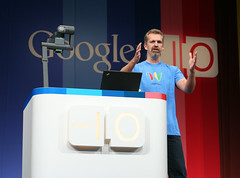
Lars Rasmussen, Google Wave
Image by niallkennedy via Flickr
今天在 [twitter](http://twitter.com/#search?q=%22Google%20Wave%22) 上最热门的话题就是这个 [Google Wave](http://wave.google.com/),目前这个产品还连一个 beta 版都没有,只有在 Google I/O 大会上的一个演示视频放在页面上,长约80分钟。Wave 的出发点是改进已有40年历史的,极为成功的 E-mail 协议,刚看上去也确实像传统的 E-mail,有些地方甚至像 BBS。但如果坚持把演示视频看完,相信很多人都会认为这是个极具创新性的产品。


Wave 与 E-mail 相比,其最大的优势应该是在于其实时性和可扩展性,同时如果 Google 的计划能够得到贯彻的话,也能保持 E-mail 协议的开放性。有[说法](http://www.readwriteweb.com/archives/five_sites_that_let_your_experience_the_real-time.php)认为实时的网络是互联网的下一个发展方向,并认为 twitter 的实时搜索将对 Google 等搜索引擎[构成挑战](http://www.techweb.com.cn/world/2009-03-05/391846.shtml),但现在看来 Google Wave 已经把“实时”的含义提高到了类似“实时操作系统”的层次,例如[这个实时搜索 demo](http://www.youtube.com/watch?v=v_UyVmITiYQ#t=41m41s) 所展示的。当然这种实时性目前还限于 Wave 内部,比如虽然用户可以做到从 Wave 内更新 bugzilla 的 bug 状态,在 bugzilla 页面上还是要刷新一下才能看到结果,但如果 Wave 协议果然遍布了整个网络,其效果将是非常惊人的,相当于把电视台一档一档录制好的节目全部变成现场直播的真人秀。

可扩展性也并不是什么新概念,但与实时性结合起来后,也能够实现一些仅存在于科幻小说中的应用。比如演示视频最后的十分钟,感觉是把 Google 某个为人诟病的产品化腐朽为神奇了。Wave 还实现了一些被谈论了很久但是没有产品,或者产品接受度不高的技术,比如分布式评论和实时在线合作,也是通过多样的 extension 实现的。

Wave 对于任何需要远程协作的行业应该都是有用的。想象一下,杂志编辑可以与作者进行即时的沟通;记者可以把照片拖进 Waves,同样的照片立即出现在图片编辑的 Waves 当中,双方可以同时编辑图片的标题;科学家可以实时发布实验结果并立即得到同行的反馈,甚至通过不同数据库读到同一篇论文的读者可以同时让作者看到ta们的评论;看完了一部电影,可以通过追踪它的 wave 看到从豆瓣到 imdb 再到烂番茄上所有人的评论……

当然,顺着这些图景再想下去,会发现 Wave 带来的还不只这些。如果 Waves 的配套技术发展成熟,也许我们会发现 Web 2.0 网站慢慢地趋同(当然现在也可以说开始有这样的趋势了),因为对任何话题的讨论都渐渐被 Waves 整合起来了;而另一方面,对个人来说ta的 Web 体验也可以因为 Waves 而趋向于定制化,当然“查邮件综合症”“挂 IM 综合症”以及“Facebook 刷状态综合症”也可能演化成更为严重的“泡 Wave 症”;甚至有一天也许现在的 Web 都会改头换面,只剩下某种形态的 Wave 和后端的数据库,我觉得 Wave 有这个潜力。

当然现在的 Wave 技术还没有那么夸张。Wave 的协议是在 XMPP 的基础上改进的,目前似乎还只支持基于文本和静态图像的应用,不知道与 Flash 之类媒体交互的能力如何。Google 将 Wave 定位为通讯和合作工具,目前看来其技术是基本能满足这个要求的。但是要更进一步的话,Wave 可能需要处理更多媒体和文件形式的能力(通过下一代 HTML 和 XML?),以及更复杂的会话和权限操作。但现在的 Wave 从演示看来,已经是一个革命性的协议/平台/产品了。

Google 的工程师在演示中说将在今年晚些时候发布 Wave,而且它将是开源的,理论上说任何组织和个人都可以在它们的服务器上架设属于自己的 Wave 系统。不过以这样一个实时系统的流量和系统开销,估计 Google Wave 到时候仍然会是最普及的甚至唯一的大众 Wave 网络。也许 Google 会沿用 GMail 的思路,提供有偿的个人/企业专用 Wave 系统。还有一个问题我没有想明白,这个 Wave 里怎么插广告呢?


Reblog this post [with Zemanta]

2009年5月8日星期五

Way to go Cpt. Kirk!

上次看 Star Trek 电影还是上世纪九十年代看的某国内电视台盗播的 [Star Trek VI: The Undiscovered Country](http://www.imdb.com/title/tt0102975/),从那时到今年我没有看过这个题材的任何真人实拍影视作品,所以我相信我写的这些还是比较能代表大部分普通人的口味的。从一个比较正常(相对 Trekkies 来说)的科幻片影迷的角度讲,J. J. Abrams 的这部新 Star Trek 完全满足了它的预告片和 Rotten Tomatoes 上 95% 的好评率带给我的期望。

从影片的剧情安排,不难看出导演的意图是一方面调动 Star Trek 系列本已存在的数量庞大的 trekkies/ers 群体,一方面重新启动这个在过去近二十年中几乎已被遗忘的系列,让新影迷认识 Star Trek 的魅力。我相信 J. J. 至少很好地实现了前一个目标。虽然影片剑走偏锋地没有加入 Klingon 的戏份,但无论是剧情还是场面,都忠实地还原了 Star Trek 系列激烈、紧凑的风格,而且在视觉效果方面更上层楼。任何接触过 Star Trek 的人,看到新世纪电影技术打造的 NCC-1701 企业号(奋进号?),都必然产生见到老朋友的感动之情。

至于吸引新观众方面,因为我已经受过 Star Trek 的“毒害”,不好妄下断言。但可以肯定的是,Star Trek 在这一点上将比 Star Wars 系列要成功,因为这个剧本基本没有预设观众看过以前的影片/电视剧,而且将其从系列中独立出来看,即不考虑 Star Trek 名气的影响,它也是一部很有亮点和发展潜力的新作。在短短两个小时的时间里,Star Trek 交代了系列的世界观,讲述了一个完整的故事,同时塑造了一群鲜明的形象。有了这些要素,我想不论新老 Trek 影迷都已经可以期待一个成功的续集了。把一个长期被边缘化的系列重新塑造成好莱坞的一线题材,将是这一部 Star Trek 可以在系列历史上夸耀的功绩。

当然,要同时满足老一代 Trekkie/er 的怀旧要求和新一代观众的口味并不容易,Star Trek 也需要做一些妥协。剧情方面为了照顾新影迷,不能过多地涉及作为系列背景的政治、历史要素,(再次抱怨一下)连 Klingon 也没有正式出场;而为让老一代 Star Trek 演员出场而安排的一段戏也略显突兀。不过剧情还是保持了 Star Trek 一直以来吸引观众的要素,在近年来的科幻题材影片中,体现了很高的编剧水平。特别是剧本能把改变历史/平行宇宙这样的题材说圆了,是非常难得的。

影片启用了大量的年轻演员,可见制片方看到了这个题材的潜力,很可能将其作为一个长期发展的系列。虽然在影片拍摄期间有人怀疑如此年轻的演员能否演出当年 William Shatner 和 Leonard Lemoy 的那种魄力,但看到这些演员的表现后他们的疑虑应该可以打消了。他们也许演不出老演员的那种沉稳,但他们也演出了年轻的企业号船员的果断、勇敢,以及作为系列标志之一的冒险精神,这是年龄稍大的演员很难演出来的效果。要注意的是根据剧情,他们还都是未出茅庐的军校生。有些表演看起来有些像校园剧,但只要这些演员比他们的角色成熟得快,在下一部 Star Trek 里这应该就不成为问题了。

影片在紧张中不失幽默,虽然暂时还没有体现出任何深邃的内涵,但足以让观众被这个系列所吸引,并在希望回顾系列以往作品的同时期待新作的到来。建议携三五好友一起到影院观看,以获得最佳观影体验,银幕越大越好。当然如果你的朋友或者男(女)朋友对科幻题材完全没有兴趣,还是三思而后行……今天我旁边一位男观众的女友很明显是被迫来陪看的,在开场前放 Transformers 2 片花时已经显得无聊透顶,开演后玩了两小时手机,没错我很愤怒。“Wrong us, shall we not revenge?”

另外还有句题外话。最近看上世纪70年代拍摄的 Battlestar Galactica 旧系列,注意到里面的飞船还在用球面的 CRT 单显做显示设备,战机使用的是机械式的水平仪,不由哑然失笑。2009年的企业号已经用上了多点触摸设备,或许再过30年,也会被那时的观众笑话?更重要的是,许多年以后现在的科幻片新题材有没有哪一个能够像 Star Trek,Battlestar Galactica,Terminator 和 Transformers 一样继续拥有广泛的影响和焕发新的生命力呢?也许是 Lost 和 Cloverfield?Way to go Captain Kirk, way to go J. J.!

Reblog this post [with Zemanta]